Why 65% RH Is a Starting Point, Not a Finish Line, for Serious Collectors
Ask anyone in a tobacco forum what humidity you should keep your humidor at and you'll get the same answer within about thirty seconds: 65 to 70 percent. It's practically a reflex at this point. And look, the advice isn't without merit — that range works reasonably well for a lot of cigars in a lot of environments. But the problem with universal rules is that they don't account for you. Your collection, your storage setup, your local climate, and your specific preferences don't care about what works for the average enthusiast.
If you've been chasing 65% like it's a magic number and wondering why your smokes still don't feel quite right, this one's for you.
Where the 65% Rule Actually Came From
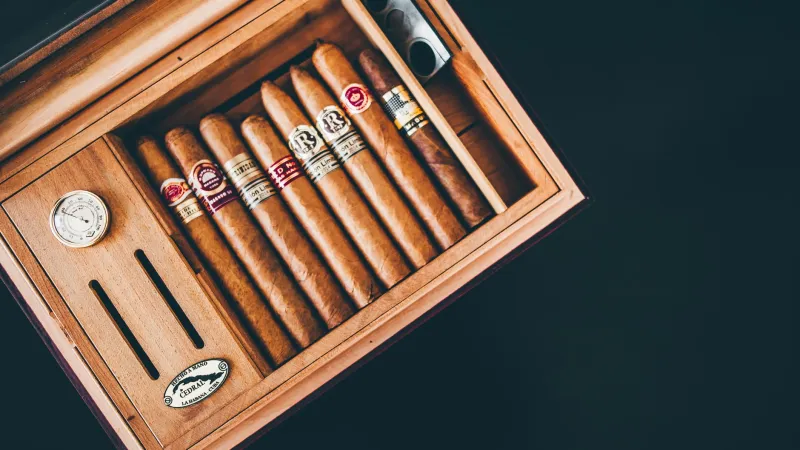
The 65-70% RH recommendation has roots in commercial cigar production and traditional humidor design. It was developed with a fairly specific product in mind: premium handmade cigars stored in Spanish cedar-lined boxes in temperate environments. For that use case, it holds up well. Cedar naturally buffers humidity, the cigars in question benefit from moderate moisture, and the range prevents both the drying that kills flavor and the excess moisture that breeds mold and causes wrapper splitting.
The problem is that the rule got applied universally — to pipe tobacco, to different cigar formats, to airtight jars, to cooler setups, to dry climates and humid ones alike. And that's where it starts to fall apart.
Different Tobacco, Different Needs
Not all tobacco wants to live at the same humidity level, and treating your collection as a monolith is one of the most common storage mistakes enthusiasts make.
Pipe tobacco is a fundamentally different animal than cigars. Most blended pipe tobaccos are processed to specific moisture levels during production, and many — particularly Virginias and flue-cured blends — actually benefit from lower humidity storage, somewhere in the 55-62% range. Keeping a well-sealed tin of Virginia flake at 70% RH isn't doing it any favors. You're risking fermentation issues and muddying the very brightness you paid for.
Perique and high-Latakia blends tend to be more forgiving across a wider humidity range but can get funky at high moisture levels over extended storage. If you're aging these long-term, erring on the drier side is generally safer.
Machine-made cigars and infused products often come with their own preferred storage conditions that don't align with handmade cigar norms. Some actually do fine at room humidity without any special setup.
Premium handmade cigars — particularly those with thicker ring gauges — can handle and sometimes prefer the higher end of the traditional range, but even here, the wrapper leaf, the country of origin, and the intended smoking timeline all matter.
Your Storage Vessel Changes Everything
A traditional Spanish cedar humidor and a glass mason jar are not equivalent storage environments, even if they're both reading 65% on a hygrometer. The cedar actively participates in humidity regulation — it absorbs and releases moisture, which smooths out fluctuations and adds a subtle aromatic contribution over time. Glass jars are airtight and passive. Once sealed, they maintain whatever moisture level the tobacco brought into them.
Cooler setups — the large plastic coolers that serious pipe tobacco collectors use for long-term aging — sit somewhere in between. They're more airtight than a humidor but less so than a sealed jar, and they don't have cedar doing any work. The humidity dynamics inside a cooler are different enough that the standard 65% target doesn't translate directly.
Knowing what your storage vessel is actually doing is step one in dialing in your target humidity rather than just borrowing someone else's.
The Regional Climate Factor Most People Ignore
Here's something that rarely comes up in the standard humidity advice: where you live matters a lot. A smoker in Phoenix, Arizona and a smoker in coastal South Carolina are working in radically different baseline environments, and that affects what they need from their storage setup.
In very dry climates, humidors lose moisture faster, hygrometers can drift, and the ambient air is constantly pulling against your efforts. You may need to target slightly higher humidity just to compensate for what's being drawn out every time you open the lid. In humid coastal or southern environments, the opposite challenge exists — keeping moisture from creeping too high requires more active management.
Seasonal swings matter too. If you're in the Midwest or Northeast, your indoor humidity in January versus July can vary by 30 points or more. Your humidor doesn't know what month it is. You have to account for that.
How to Actually Find Your Sweet Spot
Forget the forum consensus for a moment and run your own experiment. Here's a practical approach:
Start with a baseline. Calibrate your hygrometer properly — the salt test is reliable and cheap. Know that you're reading accurate numbers before you adjust anything.
Separate your collection by type. If you're storing cigars and pipe tobacco together, stop. They want different things. Give them different homes.
Run a two-week test. Pull a blend you know well. Smoke one at your current storage humidity. Then let it rest at 5% lower for two weeks and smoke another. Note the difference in draw, burn, and flavor. Do the same test going slightly higher. Your palate will tell you more than any chart.
Track seasonal drift. Check your storage conditions monthly through at least one full seasonal cycle before settling on a target. What works in October may need adjustment by February.
Listen to the smoke itself. Tight draw, slow burn, muted flavor — often too much moisture. Harsh, fast burn, cracking wrapper — too dry. The smoke is giving you feedback every time you light up.
The Takeaway: Dogma vs. Data
The 65% rule exists because it's a reasonable middle ground for a lot of situations. But you're not a lot of situations — you're one specific smoker with a specific collection in a specific place. The best humidity for your humidor is the one your tobacco actually responds well to, and the only way to find that is to test, observe, and adjust.
At High 5, we're big believers in the idea that the best setup is the one built around your actual collection rather than borrowed rules. Start at 65%, sure. But don't stop there.