Reading Your Rotation: What the Blends You Love Say About the Smoker You've Become
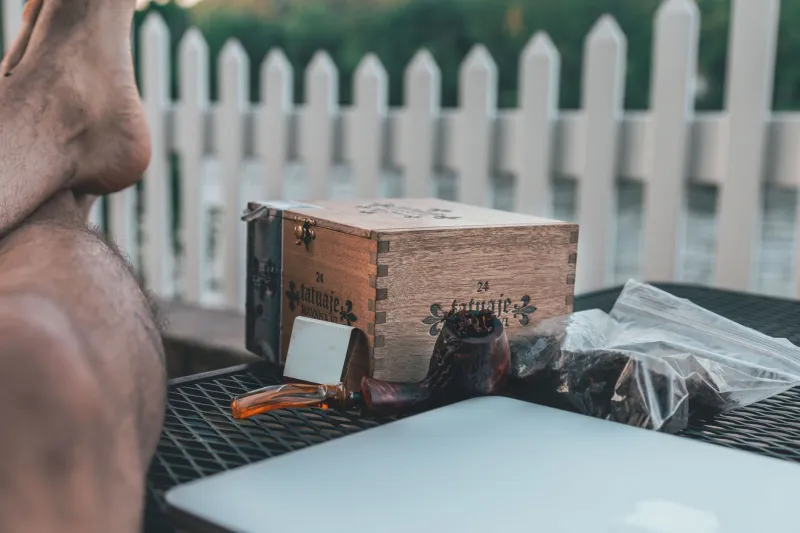
Every serious smoker has a rotation. Some are carefully curated, others are just whatever survived the last purge of the humidor shelf. But if you look at what's actually in there — really look at it — you'll find something more interesting than just a list of products. You'll find a timeline. A map of where you've been and what you were looking for at each stop along the way.
This is tobacco archaeology. And once you start doing it, you can't really stop.
The Entry Blends: Where It All Started
Most smokers can name the first blend that made them feel like they were actually doing something right. It's usually not sophisticated. Aromatic pipe tobaccos are a common starting point — vanilla, cherry, cavendish. Something approachable. Something that smelled like a warm room and didn't bite back.
For cigar smokers, it might have been a mild Connecticut shade wrapper, something smooth enough to finish without the room spinning. For hand-rollers, maybe it was a basic burley that a friend handed over.
These entry blends are significant not because they're great (though sometimes they genuinely are) but because they're where the story started. They're the blends tied to specific memories — a camping trip, a college apartment, a first job, a breakup you were getting through. The tobacco itself absorbed the moment, and now it carries it.
If you still have one of these in your rotation, it's probably not because it's the best thing on the shelf. It's because putting it in the bowl puts you somewhere specific. That's not a weakness — that's what comfort smokes are made of.
The Experimental Phase: When You Started Getting Serious
At some point, curiosity took over. Maybe you wandered into a proper smoke shop — somewhere like High 5 — and started asking questions. Maybe you fell down an online rabbit hole and came out the other side with a reading list and a strong opinion about Latakia.
This phase tends to produce a wide, somewhat chaotic collection. You were trying everything. English blends, Virginia/Perique combos, aged Cubans, infused cigars, single-origin offerings. Some of it was great. A lot of it was educational in the way that eating something truly terrible is educational — now you know.
The blends from this era that you still return to are your anchors. They survived the refinement process. They held up when your palate got more demanding. Those are worth paying attention to, because they're telling you something reliable about your actual taste profile rather than your curiosity at a particular moment.
Comfort Smokes vs. Exploration Smokes: Knowing the Difference
Every rotation contains at least two distinct types of blends, even if you've never consciously labeled them.
Anchor blends are the ones you reach for without thinking. End of a long day. First smoke of a quiet weekend morning. The one you'd grab if someone told you to pick just one for a month-long trip. These blends aren't necessarily your "best" — they're your most honest. They reflect what your palate actually craves when it's not performing or experimenting.
Exploration blends are the ones you bought because something caught your eye, because a review intrigued you, or because a fellow enthusiast made a compelling case. Some of these graduate into anchors over time. Most cycle through and move on. That's fine — that's what the exploration phase is for.
The mistake is treating all your blends the same way. Judging an anchor blend by exploration standards (or vice versa) leads to frustration. Your comfort smoke doesn't need to be complex. Your experimental tin doesn't need to be comforting. They're doing different jobs.
What Your Current Rotation Actually Reveals
Take an honest inventory. Look at what you've got open right now and ask a few simple questions.
- Which of these would you miss if it disappeared from the market tomorrow?
- Which ones have been sitting there because you feel like you should smoke them?
- Which ones did you buy based on someone else's enthusiasm rather than your own instinct?
- Which one do you reach for when you're not thinking about it?
The answers to those questions tell you more about your current taste preferences than any review site or forum thread. They also show you where your palate has actually landed versus where you've been told it should be.
The Nostalgia Factor: Handle With Care
Nostalgia is a powerful thing in any collection-based hobby, and tobacco is no exception. There are blends out there that taste objectively mediocre but carry so much emotional weight that smokers will defend them with the intensity of a championship debate.
There's nothing wrong with that. Smoke what makes you happy. But it's worth being clear-eyed about why you love something. If it's because it genuinely delivers on flavor and experience, great. If it's because it transports you to a specific time and place, that's also great — but different. Knowing which one it is helps you make smarter decisions when you're adding new things to the rotation.
Building Forward From Here
Once you've done the archaeology — once you know which blends are anchors, which are relics of old phases, and which are genuine ongoing discoveries — you can build a rotation that actually serves where you are right now as a smoker.
That might mean letting go of some things. It might mean doubling down on something you've been undervaluing. It almost certainly means being a little more honest with yourself about what you're chasing and why.
Your rotation is a living document. It should change as you change. But it should always, at its core, reflect who you actually are as a smoker — not who you're trying to be.