The Slow Ritual: What Sharing a Pipe Actually Does for the People Around You

Something changes when you hand someone a pipe. Not in a dramatic way — just a subtle shift in the energy of the room, or the yard, or wherever you happen to be sitting. The conversation slows down. The silences stop feeling awkward. People start talking about things they wouldn't normally bring up.
This isn't mystical. It's just what happens when you introduce a shared ritual that requires patience.
Why Slow Matters
We live in an era that doesn't have a lot of patience for slowness. Conversations happen in fragments. Attention is constantly divided. Even leisure time tends to get optimized and scheduled into something that barely resembles rest.
Pipe smoking is structurally resistant to all of that. You can't rush a bowl. You can't multitask your way through a smoke without losing the thread of it entirely. The pipe demands presence, and when two people share that experience, they end up present together in a way that's increasingly rare.
Psychologists who study bonding and conversation have noted for years that shared activities — particularly ones that involve a mild, repetitive physical component — lower the social guard. Fishing does it. Long drives do it. Certain kinds of cooking do it. The pipe does it in a particularly concentrated way because the ritual is so deliberate, so unhurried, and so focused on sensory experience rather than productivity.
You're not trying to get anywhere. You're just smoking. And in that space, real things tend to get said.
The Etiquette of the Shared Bowl
Sharing tobacco has its own set of unwritten rules, and understanding them is part of what makes the experience work. Getting it wrong doesn't ruin anything, but getting it right adds a layer of intentionality that elevates the whole thing.
Offer, don't push. The first rule of sharing a pipe is that it's always an invitation, never a pressure. Some people don't smoke. Some people are particular about whose pipes they'll use. Some people just aren't in the mood. Offer once, genuinely, and let the answer be whatever it is.
Know your tobacco. When you're sharing with someone who's newer to the hobby — or just less experienced with pipe smoking — think about what you're packing. A heavy, room-note-forward aromatic is usually a better entry point than a full-strength English blend that'll knock someone back in their chair. Meet people where they are.
Keep the pipe clean. This sounds obvious, but it matters more when you're sharing. A clean stem, a properly dried bowl, a pipe that's been maintained — these things show respect for the person you're inviting into the experience. It's a small gesture with real meaning.
Let the conversation breathe. This is the most important rule and the hardest one to follow for people who are used to filling silence. A shared smoke works best when nobody feels obligated to keep talking. Pass the pipe. Watch the smoke. Let the quiet do its work. The conversation will find its own pace.
Different From Other Social Rituals — But Connected to All of Them
It's worth thinking about how the shared pipe fits into the broader landscape of social rituals in American life. We have coffee culture, which is fast and transactional. We have bar culture, which tends toward noise and performance. We have dinner, which is great but structured around eating rather than talking.
The shared smoke occupies a different niche. It's slower than coffee, less performative than the bar, and more intimate than most dinner conversations because there's no task to complete. You're just there, together, with something to do with your hands and something pleasant to taste and smell.
In a lot of ways, it's closer to the front-porch culture that used to be a genuine feature of American social life — that informal, unscheduled time when neighbors would sit together and talk about nothing and everything. That culture has largely faded, and the pipe hasn't replaced it, but it keeps a version of the spirit alive for the people who participate in it.
What Collectors Say About It
Ask people who've been in the hobby for a while about their most meaningful smoking memories and the pattern is consistent: very few of them involve being alone. The pipes people remember are the ones shared with a father-in-law on a fishing trip, with a college roommate on a back porch, with a stranger at a club meeting who ended up becoming a close friend.
The tobacco is part of it, obviously. But the tobacco is almost never the whole story. It's the context — the time of day, the person across from you, the conversation that wandered somewhere unexpected — that makes those moments stick.
This is one of the things that separates pipe smoking from a lot of other hobbies. It's not just something you do for yourself. It's something you can share in a way that actually means something.
A Few Simple Ways to Build the Ritual
If you want to bring this kind of intentional sharing into your own life, you don't need to overthink it. A few practical starting points:
Keep a guest pipe. A clean, solid, entry-level pipe that you're willing to offer to someone who's curious is a genuinely useful thing to have on hand. It removes the barrier of asking someone to share your personal pipe and makes the invitation feel more natural.
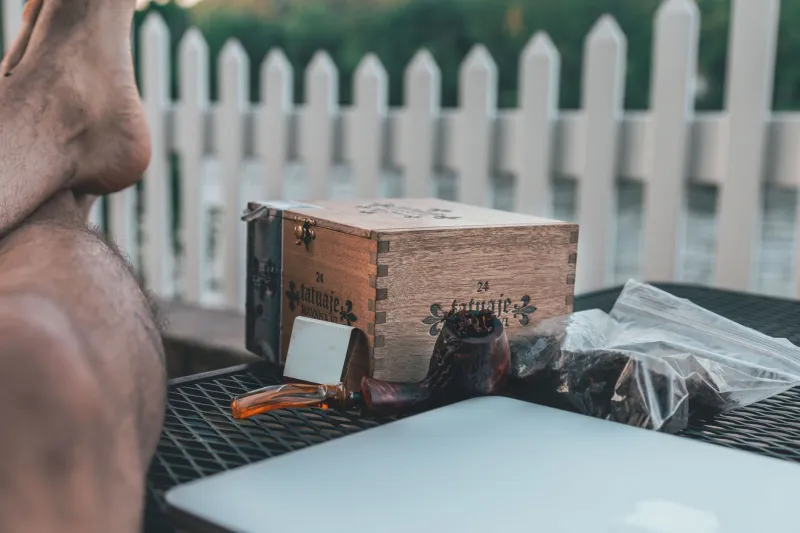
Be consistent about where you smoke. A regular spot — a back porch, a garage, a corner of the yard — becomes associated with the ritual, and that association matters. People know where to find you. The spot becomes a kind of standing invitation.
Don't explain too much. When you offer someone a smoke, let them experience it rather than narrating it. You can answer questions, but resist the urge to lecture. The pipe speaks for itself.
The Bigger Takeaway
Relationships are built in time, and specifically in shared time that doesn't feel like it has to justify itself. The pipe creates that time almost automatically. It's not a solution to anything, and it's not trying to be. It's just a very old, very human way of being present with another person — and in the right company, that turns out to be more than enough.