What's Actually Burning in Your Bowl: A Flavor Nerd's Guide to Temperature and Taste
Most people treat tobacco like a campfire — get it lit, keep it going, call it a day. And hey, no judgment. But if you've ever had a smoke that tasted flat, harsh, or just kind of meh compared to what you expected from a quality product, there's a real chance the issue wasn't the tobacco. It was the heat.
Temperature is the invisible hand behind every flavor note you experience. Too low and you're leaving complexity on the table. Too high and you're torching it into oblivion. Getting this right isn't about being obsessive — it's about actually tasting what you paid for.
The Basics: Tobacco Is a Chemistry Lab
When tobacco combusts or heats up, it doesn't just "burn." It undergoes a cascade of chemical reactions that release hundreds of different compounds, each contributing something distinct to flavor, aroma, and body. Alkaloids like nicotine, organic acids, sugars, and volatile aromatic compounds all behave differently depending on how much heat they encounter.
Here's the key thing to understand: different compounds activate at different temperatures. Think of it like cooking. You wouldn't use the same heat to caramelize onions as you would to sear a steak. Same logic applies to your smoke.
At lower temperatures — roughly in the 300–400°F range for combustion-based products — you're mostly volatilizing the lighter aromatic compounds. These are the ones responsible for delicate top notes: floral hints, grassy freshness, subtle fruit. Rush past this range too quickly and you never really experience them.
As heat climbs into the 400–600°F zone, the heavier, more complex compounds start breaking down. This is where a lot of the richness lives — the earthy tones, the woody depth, the nuttiness that makes a well-aged Virginia blend so satisfying. This is the sweet spot most experienced smokers are instinctively chasing.
Push beyond 700°F and you're entering combustion territory where the chemistry gets messy. Sugars char rather than caramelize. Proteins break down into bitter compounds. The result? That sharp, acrid bite that makes the back of your throat unhappy. It's not the tobacco's fault. It's a heat problem.
Pipes, Cigars, and the Heat Equation
Different smoking formats have their own temperature dynamics, and knowing your format matters.
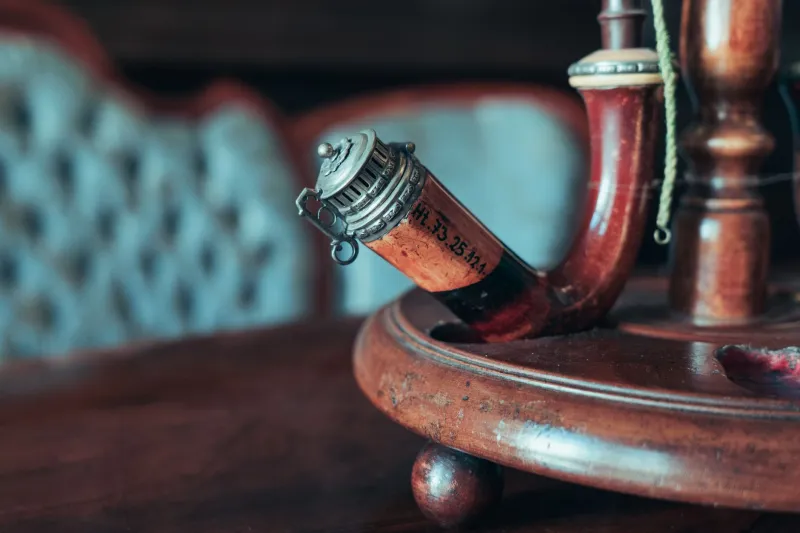
Pipe smoking gives you the most direct control over temperature. How you pack your bowl, your cadence of puffing, and even the pipe material itself all influence heat. A briar pipe, for example, naturally wicks moisture and dissipates heat better than a meerschaum or a clay — which is partly why briar is so popular with everyday smokers. Slow, even puffs keep combustion in that productive middle range. Rapid, aggressive draws spike the temperature fast and hard, which is usually where tongue bite comes from.
The classic advice to "sip" a pipe rather than drag it exists for exactly this reason. You're not trying to pull maximum volume — you're trying to maintain a steady, controlled burn that keeps the bowl in its flavor-productive range.
Cigars are a different animal. Because you're not packing a bowl but drawing through a full leaf construction, airflow and draw resistance play a huge role in temperature regulation. A cigar that's rolled too tight will require more effort to draw, which generates more heat at the foot. One that's too loose burns fast and hot. A proper draw — about three to four seconds of gentle, consistent pull — is the benchmark most experienced cigar smokers work toward.
Lighting matters enormously here too. Torch lighters burn hotter than soft flames, which is great for an even toast but can scorch the wrapper if you're not careful. Taking time to properly toast the foot before fully lighting isn't a ritual for its own sake — it's practical temperature management that sets the entire smoke up for success.
Finding Your Range: Practical Experiments Worth Trying
You don't need a thermometer to start developing better heat instincts. Here's how to build the skill through deliberate practice.
Slow everything down. On your next session, consciously extend the time between puffs by 30 seconds more than you normally would. Notice how the flavor profile shifts. Many smokers find they pick up sweetness and complexity they'd been burning past.
Relight less aggressively. When a pipe or cigar goes out, the instinct is to torch it back to life. Try a gentler approach — a soft flame or a single match, just enough to get it going again rather than fully rekindling. You'll often find the flavor is more nuanced coming back from a rest.
Compare the same tobacco at different packing densities (pipe smokers). Pack one bowl loosely and one firmly. Smoke both under otherwise identical conditions. The flavor differences will be noticeable and educational.
Pay attention to the first third. This is where temperature has the most dramatic effect on flavor. The first few puffs are your window into those lighter aromatic compounds. If you're consistently disappointed by what a tobacco tastes like early on, your lighting technique is the first thing to examine.
Why This Is the Real Connoisseur Divide
Here's the honest truth: premium tobacco is expensive partly because a lot of craft went into building a complex flavor profile. Rare leaf, careful fermentation, thoughtful blending — all of that effort is embedded in that product. But none of it reaches you if the heat is wrong.
Casual smokers tend to treat temperature as a given — something that just happens when you light up. Serious enthusiasts understand it as a variable they actively manage. That shift in mindset is what makes the difference between someone who says "I don't get what the fuss is about" after smoking a highly regarded blend and someone who walks away genuinely impressed.
The good news is that temperature mastery isn't complicated. It doesn't require gear upgrades or expensive equipment. It requires attention, patience, and a willingness to slow down and actually taste what's happening in real time.
At High 5, we're big believers that the best smoking experience is the one you've taken the time to understand. The chemistry is happening whether you're paying attention to it or not — might as well put it to work for you.